Residential subdivisions across Cary often encounter intense wasp activity between May and October. In heavily wooded communities like Preston, Lochmere, and MacGregor Downs, mature loblolly pines and dense hardwood…
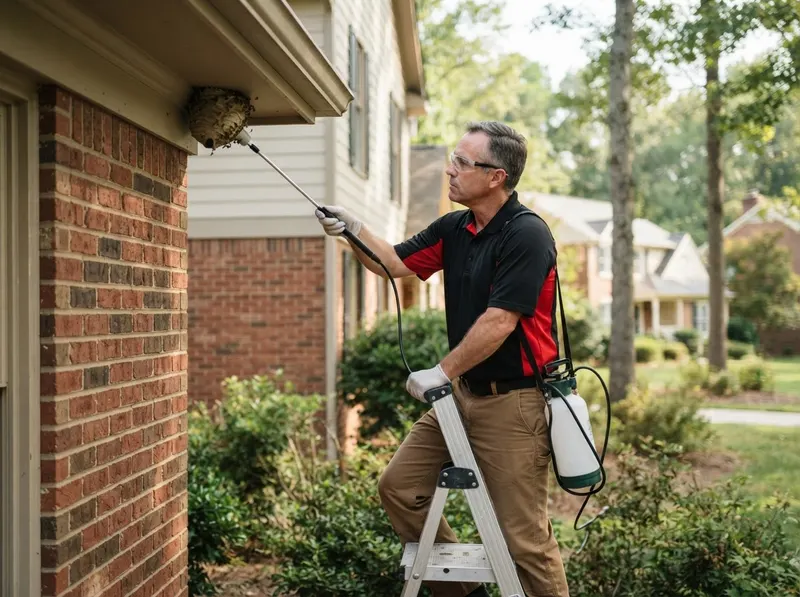
Residential subdivisions across Cary often encounter intense wasp activity between May and October. In heavily wooded communities like Preston, Lochmere, and MacGregor Downs, mature loblolly pines and dense hardwood canopies supply foraging paper wasps and European hornets with consistent wood fibers to construct expansive nests. When stinging colonies populate porch soffits, screened patios, or the underside of structural decking, retail spray cans frequently fall short. Direct aerosol spraying often scatters aggressive worker insects toward nearby doorways, driving pests indoors rather than eradicating the nesting core. Professional physical removal paired with botanical-derived contact products resolves the colony at its origin, neutralizing defending female insects before the papery combs are fully detached and cleared away.
Selecting standalone professional removal fits households seeking rapid single-treatment safety rather than committing to mandatory, recurring multi-month extermination contracts. The operational trade-off centers on structural elevation versus localized yard containment. A single exterior paper wasp colony hanging from a first-story gutter in Amberly or Carpenter Village presents a straightforward, localized knockdown. Conversely, an established yellowjacket pocket burrowed into pine-straw ground cover near high-traffic walkways in Wellsley or Twin Lakes demands subterranean dusting and specialized protective gear. Removing the visible nest material prevents opportunistic queen wasps from reclaiming established scent lines during the late-season nesting cycles common in Wake County's moist microclimate.
Technicians follow an orderly, four-stage procedural workflow to preserve family safety:
1. Exterior perimeter assessment identifying entrance cavities, foraging patterns, and exact nesting boundaries across eaves, attics, and landscaping.
2. Application of targeted, low-toxicity aerosolized agents calibrated to neutralize the defensive guard wasps instantly without generating off-target indoor drift.
3. Physical scraping and bagging of all nest combs, preventing unhatched larvae from maturing or drawing secondary beetle infestations.
4. Placement of a clean residual barrier over the mounting site to strip residual trail pheromones and suppress subsequent seasonal rebuilding.
Every job gets a firm, written price after a free on-site visit.
Tell us about your wasp nest removal service job in Cary and we'll send a clear, written quote, usually the same day.
 Copper Bell Pest Control