Suburban Cary properties frequently encounter two distinct roach populations due to dense pine canopies and crawlspace foundations. In mature developments such as Preston, Lochmere, and MacGregor Downs, large American…
Suburban Cary properties frequently encounter two distinct roach populations due to dense pine canopies and crawlspace foundations. In mature developments such as Preston, Lochmere, and MacGregor Downs, large American roaches (often called palmetto bugs) migrate inward from moist landscape mulch, gutters, and shaded crawlspaces during peak summer humidity. Conversely, German roach infestations occur independently of outdoor yard conditions, establishing colonies behind kitchen appliances, under sink cabinets, and near motor housings in communities like Amberly and Carpenter Village. Effective management requires identifying the target insect; treating an indoor German roach colony with outdoor perimeter sprays scatters the population deeper into wall voids, worsening indoor food prep contamination.
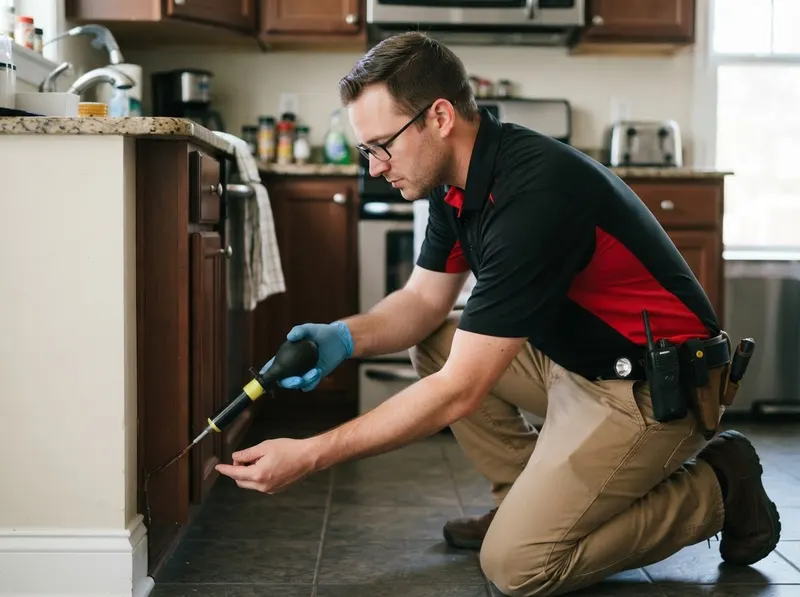
Treatment follows a low-stress protocol for family households. Technicians deploy targeted insect growth regulators (IGRs) and non-repellent gel baits directly into hinge spaces, baseboard seams, and pipe penetrations rather than broad-spectrum indoor aerosol sprays. This method targets nesting clusters without releasing airborne residues into bedrooms or kitchen prep surfaces. An exterior micro-barrier is established around the foundation perimeter, basement vents, and weep holes to block seasonal wood roach ingress from shaded Wake County tree canopies. Routine indoor preparation requires clearing items from beneath affected plumbing sinks and maintaining clean surfaces during the bait uptake cycle.
Homeowners selecting between cleanout services and recurring quarterly maintenance face clear operational trade-offs. A standalone intensive cleanout addresses active indoor breeding populations within 14 to 21 days as bait cycles through the egg stage, though it leaves exterior perimeters open to re-entry after 90 days. Ongoing seasonal protection establishes a defensive perimeter against forest-dwelling species common near Hemlock Bluffs Nature Preserve and Fred G. Bond Metro Park, preventing outdoor insects from entering structural voids throughout the year.
Every job gets a firm, written price after a free on-site visit.
Tell us about your roach control service job in Cary and we'll send a clear, written quote, usually the same day.
 Copper Bell Pest Control