A sealed crawl space preserves subfloor humidity below the 60% threshold where fungal rot and wood-destroying beetles thrive, but sealing an active pest pathway traps wood-boring insects and rodents directly against…
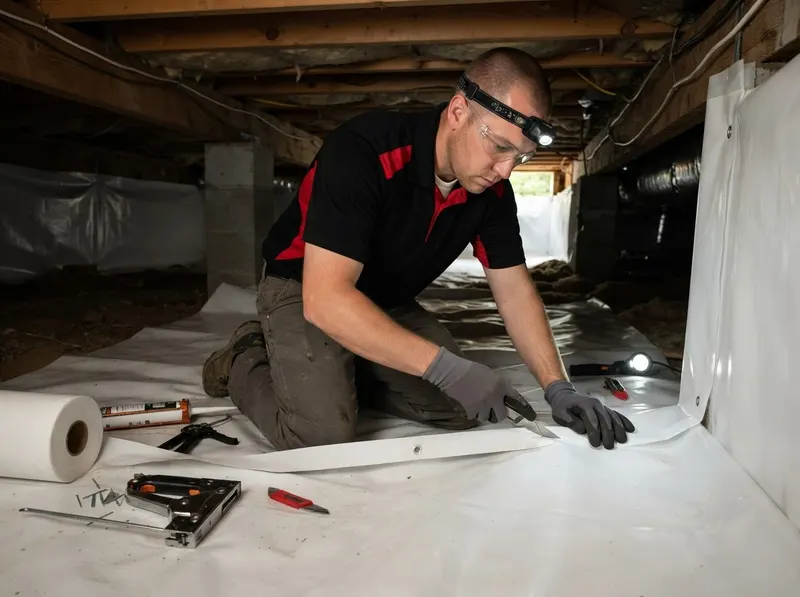
A sealed crawl space preserves subfloor humidity below the 60% threshold where fungal rot and wood-destroying beetles thrive, but sealing an active pest pathway traps wood-boring insects and rodents directly against structural joists. Crawl space encapsulation support service bridges the operational divide between general pest management and foundation water mitigation. Installing standard 12-mil or 20-mil vapor barriers over unaddressed termite tunnels or subterranean rodent burrows leads to tears in the poly sheeting, pest-compromised foundation tape, and concealed colonies beneath living rooms. If subfloor timber shows historical moisture damage without live activity, mechanical dehumidification and exclusion sealing protect the envelope. If live rodents or subterranean termites occupy the ground layer, biological sanitization and wood-safe perimeter treatments precede liner pinning so no organisms stay active beneath the membrane.
Dense, forested neighborhoods throughout Cary feature mature hardwood canopies that retain soil moisture along perimeter block walls. Homes constructed adjacent to aquatic buffers in Lochmere and Twin Lakes, or bordering creek drainages in Preston and Wellsley, experience prolonged atmospheric humidity that drives camel crickets, carpenter ants, and Norway rats into subfloor vent openings. In western Cary communities like Amberly, Highcroft, and Carpenter Village, heavy red clay soils slow stormwater absorption around stem walls, shifting moisture upward into vented foundations. Encapsulation support technicians seal pipe penetrations through rim joists using galvanized hardware cloth and expanding polyurethane foam, spray water-based botanical or reduced-toxicity insect barriers along masonry pillars, and extract contaminated fiberglass batts to prepare raw dirt floors for clean membrane coverage.
Technicians follow a standardized five-step structural sequence on-site: 1. Measure relative humidity and inspect sill plates, piers, and joist spans for structural pest ingress. 2. Remove soiled insulation, animal feces, and organic debris down to the bare dirt floor. 3. Mechanical exclusion sealing blocks all gaps exceeding one-quarter inch using 19-gauge steel wire mesh and silicone-backed sealants. 4. Apply non-volatile, odorless perimeter insecticides and localized borate wood treatments to bare foundation elements. 5. Perform final clearance verification so the space remains stable, pest-free, and clean for complete vapor barrier coverage.
Every job gets a firm, written price after a free on-site visit.
Tell us about your crawl space encapsulation support service job in Cary and we'll send a clear, written quote, usually the same day.
 Copper Bell Pest Control